Beranda blog Halaman 3

Dikritik Soal Pengangkatan Fesly Jadi Direktur Perencanaan Infrastruktur BP Batam, Begini Jawaban Amsakar Achmad

BATAM – Wali Kota Ex-Officio Kepala Badan Pengusahaan(BP) Batam, Amsakar Achmad mendapatkan kritik dari berbagai elemen masyarakat terkait pengangkatan Fesly Abadi Paranoan sebagai Direktur Perencanaan Infrastruktur di BP Batam. Kritik ini dikarenakan Fesly adanya penyidikan kasus dugaan korupsi revitalisasi dermaga utara Pelabuhan batu ampar oleh penyidik Subdit 3 Tipikor Ditreskrimsus Polda Kepri.
Kuliner khas Batam

Dalam proses penyidikan perkara tersebut, sekitar bulan Maret 2025 lalu penyidik melakukan penggeledahan di kantor dan rumah yang bersangkutan.

Menanggapi kritik tersebut, Wali Kota Ex-Officio Kepala BP Batam, Amsakar Achmad menegaskan bahwa pihaknya menghormati proses hukum yang sedang berjalan di Ditreskrimsus Polda Kepri.

“Proses pemeriksaan oleh penyidik akan terus kami hormati. Dan saya sendiri yang akan bertanggung jawab jika Fresly sudah dijadikan tersangka,”ujarnya kepada wartawan usai menghadiri Rapat Paripurna DPRD Batam, Senin 30 Juni 2025 sore.

Ia menegaskan bahwa jika nantinya penyidik menetapkan Fesly sebagai sebagai tersangka dan telah berkekuatan hukum tetap akan dilakukan revisi atau penunjukan pejabat baru.

“Kalau seandainya proses(penyidikan) itu sudah final dan berkekuatan hukum tetap, kita akan lakukan revisi atau penunjukan baru,”pungkasnya.

Berita sebelumnya, Ketua Kelompok Diskusi Anti 86(Kodat86), Tain Komari angkat bicara soal penanganan kasus dugaan korupsi Revitalisasi Kolam Dermaga Utara Pelabuhan Terminal Batu Ampar Anggaran BLU BP Batam Tahun 2021-2023 di Direktorat Reserse Kriminal Khusus(Ditreskrimsus) Polda Kepulauan Riau.

“Kita berharap kasus ini segera dituntaskan. Proyek tersebut sudah mangkrak, dan tidak bisa digunakan sesuai spesifikasi yang direncanakan awal,”ujarnya kepada SwaraKepri, Selasa 17 Juni 2025 sore.

Ia menilai penyidikan kasus ini berjalan lambat karena penyidik belum menetapkan tersangka. “Memang tidak ada SOP untuk batas Waktu penyidikan, tapi seharusnya penyidik sudah menetapkan tersangka dalam kasus ini,”ujarnya.

Menurut dia, kasus ini seharusnya tidak terlalu rumit, karena bukti-bukti pasti sudah dikantongi penyidik. “Untuk menghitung kerugian negara, penyidik minta BPKP untuk menghitung. Penyidik melakukan penyidikan untuk menemukan bukti-bukti terhadap dugaan korupsi. Sampai sekarang belum ada tersangka,”jelasnya.

Kata dia, revitalisasi kolam dermaga utara Pelabuhan terminal diduga bermasalah di kontruksi awal. “Sebenarnya ada masalah di kontruksi awal. Kenapa alur itu tidak bisa dikeruk lagi, karena kalau dipaksakan tiang pancang akan roboh,”ujarnya.

Disisi lain, Tain juga menyoroti soal pelantikan FAP sebagai Pejabat Eselon 2 di Badan Pengusahaan(BP) Batam pada Senin 16 Juni 2025. “Salah satu pejabat eselon 2 yang dilantik itu diduga terkait dengan kasus dugaan korupsi revitalisasi dermaga utara Pelabuhan batu ampar yang sedang ditangani Polda Kepri,”bebernya.

“Status hukum FAP sebenarnya bagaimana dalam perkara tersebut? Karena sekitar bulan Maret 2025 lalu penyidik sudah melakukan penggeledahan di kantor dan rumah yang bersangkutan,”lanjut Tain.

Menurut dia, status yang bersangkutan harus jelas dalam perkara tersebut, karena sesuai ketentuan, penggeledahan bisa dilakukan setelah mendapatkan izin Ketua Pengadilan.

“Dasar penyidik mengajukan penggeledahan ke Ketua Pengadilan karena sudah terbit SPDP. SPDP diterbitkan karena penyidik sudah menemukan dugaan tindak pidana, dan kemungkinan sudah mengarah kepada penetapan tersangka,”jelasnya.

Tain juga mengkritisi Kepala BP Batam yang melantik FAP sebagai salah satu pejabat eselon 2 di BP Batam. “Kepala BP Batam juga kita pertanyakan yang melantik seseorang menjadi pejabat yang diduga sedang bermasalah hukum,”pungkasnya./KR

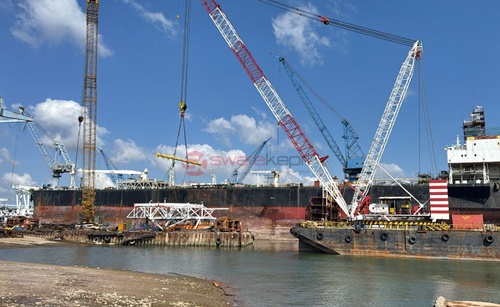
Kapal Tanker MT Federal II Dipasang Police Line, Begini Kata Manajemen PT ASL Shipyard Indonesia

BATAM – Aparat Kepolisian Resor Kota (Polresta) Barelang masih melakukan penyelidikan terkait kebakaran Kapal Tanker MT Federal II di Galangan PT ASL Shipyard Indonesia yang berada di wilayah Tanjunguncang, Batam.

Kasat Reskrim Polresta Barelang, Kompol Debby Tri Andrestian menegaskan bahwa Tempat Kejadian Perkara(TKP) Kebakaran di Kapal Tanker MT Federal II masih dipasang Garis Polisi(Police Line).

“TKP kebakaran masih status quo(Police Line),”ujarnya kepada SwaraKepri, Rabu 2 Juli 2025 pagi.

Hal senada juga disampaikan Kepala Dinas Ketenagakerjaan dan Transmigrasi(Disnakertrans) Provinsi Kepri, Diky Wijaya. Disnakertrans Kepri juga masih melakukan investigasi terkait dugaan pelanggaran Standar Operational Prosedur(SOP) Keselamatan dan Kesehatan Kerja(K3).

Beli vitamin dan suplemen

“Masih dalam Police Line(TKP Kebakaran),”ujarnya.

Ketika disinggung soal adanya informasi dugaan pemeliharaan(repair) kapal Tanker MT Federal II sudah kembali dilanjutkan di PT ASL Shipyard Indoenesia, Diky mengaku akan segera melakukan pengecekan.

“Coba nanti kami cek,”tegasnya.

Tanggapan Manajemen PT ASL Shipyard Indonesia

Sementara itu, salah satu petinggi di manajemen ASL Shipyard, Mr Kim Dong Gun ketika berupaya ditemui dan dikonfirmasi tidak bersedia bertemu dan mengelak memberikan komentar. Awalnya sempat membuat janji untuk bertemu Kantor PT ASL Shipyard Indonesia Rabu pagi pukul 09.00 WIB. Lalu kemudian dibatalkan dan mengirimkan pesan WhatsApp kepada SwaraKepri. Ia mengaku bukan pihak yang bertanggung jawab soal insiden Kebakaran Kapal MT Federal II tersebut.

“Sorry, I am not the person in charge on this matter. Pls follow the Security Head. (Maaf, saya bukan orang yang bertanggung jawab dalam masalah ini.
Silakan ikuti Kepala Keamanan),”ujarnya kepada SwaraKepri, setelah sebelumnya beberapa kali berbicara melalui sambungan telepon, pada Rabu 2 Juli 2025 siang.

Pasca Kebakaran, Aktifitas Repair Kapal Diduga Kembali Berlanjut

Berdasarkan informasi yang dihimpun SwaraKepri dilapangan, aktifitas repair di atas Kapal Tanker MT Federal II diduga sudah Kembali berlanjut pasca kebakaran yang menewaskan 5 orang pekerja.

“Beberapa hari lalu sudah mulai lagi kerja disana. Mereka kerja menaikkan pipa, ada beberapa pipa yang diganti. Lanjut lagi kerja, termasuk cleaning. Dua hari lalu mereka mulai kerja, “ujar narasumber internal SwaraKepri, Selasa 1 Juli 2025.

Menurut dia, sesuai aturan pemerintah, ketika terjadi Fatality(kematian) itu tidak boleh secepatnya closing. Aturannya seharusnya ditutup(pekerjaan) dan tidak boleh ada aktivitas.

“Aturannya seperti itu, kita pun heran kok bisa langsung kerja?,”ujarnya sambal meminta namanya tidak dipublikasikan.

Selama ini kata dia, perusahaan Shipyard bisa menunda pengerjaan repair hingga 3 minggu jika ada korban cedera dalam kecelakaan kerja, atau disebut LTI(Loss Time Injury/kehilangan waktu oleh kejadian kecelakaan kerja tapi tidak meninggal). “Ini sudah meninggal 5 orang, kok jeda cuma beberapa hari dan langsung kembali kerja? ini sudah fatality, beda dengan LTI,”pungkasnya.

Disnakertrans Kepri Peran Superintendent Kapal Tanker MT Federal II

Dinas Tenaga Kerja dan Transmigrasi(Disnakertrans) Provinsi Kepulauan Riau masih terus melakukan investigasi terkait dugaan pelanggaran Standar Operasional Prosedur(SOP) Keselamatan dan Kesehatan Kerja(K3) pasca kebakaran Kapal Tanker MT Federal II di galangan ASL Shipyard, Tanjunguncang, Batam, pada Selasa 24 Juni 2025 lalu.

Beli vitamin dan suplemen

Selain melakukan investigasi di PT ASL Shipyard, Penyidik Pegawai Negeri Sipil(PPNS) Disnaktertrans Kepri juga mendalami peran dari Superintendent Kapal Tanker MT Federal II.

“PPNS sedang melakukan pendalaman(dugaan kelalaian dari Supertintendent),”kata Kadisnakertrans Kepri,Diky Wijaya kepada SwaraKepri, Senin 30 juni 2025 siang.

Untuk diketahui, Superinentent Kapal bertanggung jawab memastikan operasional kapal berjalan lancar, aman, dan efisien sesuai dengan standar dan regulasi yang berlaku. Superintendent Kapal bertindak sebagai jembatan antara manajemen perusahaan dan awak kapal, memastikan semua aspek operasional kapal, termasuk keselamatan, pemeliharaan, dan kepatuhan, dikelola dengan baik./RD

Kapal Tanker Federal II Terbakar, Ombudsman Soroti SOP K3 di ASL Shipyard

BATAM – Kepala Ombudsman Republik Indonesia Perwakilan Kepulauan Riau, Lagat Siadari, menyatakan keprihatinan mendalam atas insiden kebakaran yang menewaskan sejumlah pekerja di galangan kapal PT ASL Shipyard, Tanjunguncang, Batuaji.

Menurutnya, peristiwa ini bukanlah kejadian pertama, melainkan bagian dari pola kelalaian yang terus berulang dari tahun ke tahun.

Lagat mengungkapkan bahwa pada Maret 2021, seorang pekerja bernama Petrick Natanael Sitompul juga tewas setelah jatuh dari ketinggian 25 meter di salah satu kapal super tanker milik perusahaan tersebut.

“Meski insiden itu sempat menjadi sorotan, nyatanya langkah korektif yang seharusnya diambil oleh perusahaan tidak menunjukkan hasil nyata,” ujarnya kepada wartawan, Rabu 26 Juni 2025.

Ia menegaskan bahwa alasan “human error” tidak bisa terus-menerus dijadikan kambing hitam atas hilangnya nyawa para pekerja. “Perusahaan harus melakukan evaluasi menyeluruh. Jangan sampai human error menjadi alasan klise setiap kali nyawa melayang,” tegas Lagat.

Lebih jauh, ia juga menyoroti minimnya transparansi manajemen PT ASL Shipyard kepada publik, terutama terkait standar keselamatan dan kesehatan kerja (K3).

Ia mempertanyakan apakah sistem dan prosedur K3 di perusahaan tersebut telah memenuhi standar operasional perusahaan (SOP) yang semestinya, serta sejauh mana pengawasan internal benar-benar diterapkan.

“Kalau memang penyebab ledakan dan kebakaran karena minyak yang tersimpan di kapal, maka K3 di perusahaan ini patut dipertanyakan. Apakah mereka punya sistem pengawasan yang layak?” tanya Lagat.

Ombudsman Kepri mendesak agar Polda Kepri segera melakukan penyelidikan menyeluruh terhadap PT ASL Shipyard. “Harus ada tindakan tegas jika memang ditemukan kelalaian. Keselamatan pekerja tidak boleh lagi dikorbankan,” tegasnya.

Saat berita ini diunggah manajemen ASL Shipyard belum berhasil dikonfirmasi terkait penyebab peristiwa kebakaran Kapal Tanker Federal II tersebut. Upaya konfirmasi yang dilakukan SwaraKepri kepada HSE Manager (Health, Safety, and Environment Manager) ASL Shipyard berinisial RDM belum direspon./KR

Polisi Tangkap Pelaku Perusakan Makam di Yogya

0

YOGYAKARTA – Remaja berinisial ANF (16) warga Kecamatan Banguntapan, Kabupaten Bantul, Daerah Istimewa Yogyakarta (DIY), ditangkap usai merusak makam beberapa waktu lalu.

Kapolsek Kotagede, Kota Yogyakarta, AKP Basungkawa mengatakan, hingga saat ini pihaknya masih mendalami motif bocah yang berstatus siswa SMP tersebut.

“Dia mengakui semua perbuatannya di Kotagede dan Bantul. Dia melakukan perusakan memakai batu dan benda-benda di sekitar,” katanya saat jumpa pers, 20 Mei 2025.

Basungkawa membeberkan, pelaku melakukan perusakan nisan makam Kotagede pada Jumat, 16 Mei 2025. Kemudian ia melanjutkan tindakan serupa di pemakaman umum kawasan Kecamatan Banguntapan dan Sewon, Kabupaten Bantul pada Sabtu, 17 Mei 2025.

“Dari hasil sementara pemeriksaan, pelaku mengaku melakukan perusakan itu sendiri. Selebihnya polisi masih melakukan pendalaman dan menititipkan pelaku di Balai Perlindungan dan Rehabilitasi Sosial Remaja (BPRSR) Kabupaten Sleman,” terangnya.

“Motif perbuatannya masih kami dalami, tapi ini baru pertama ANF melakukan perbuatannya,” jelasnya.

Dirinya mengungkapkan juga masih mendalami persoalan kejiwaan pelaku. Pasalnya, ada anggota keluarga pelaku yang alami persoalan kejiwaan dan menjalani rawat jalan.

Basungkawa menambahkan, pelaku jarang tidur di rumah dan sering keluar rumah jalan kaki.

“Pelaku ini seharian tak tidur di rumah. Jalan kaki ke mana-mana,” pungkasnya./WT

Mud Army 2.0 urged to check with home owners before tossing things out

0

It is a daily ritual for millions of Australians, but if you have noticed the price of your morning flat white or soy latte increase, brace yourself — it is likely to get worse.

By the end of the year, coffee lovers will be paying up to $7 for a regular cup as cafes nationwide struggle to absorb growing overhead costs warned David Parnham, president of the Café Owners and Baristas Association of Australia.

“What’s happening globally is there are shortages obviously from catastrophes that are happening in places like Brazil with frosts, and certain growing conditions in some of the coffee growing areas,” Mr Parnham said.

“The cost of shipping has become just ridiculous.”

Key points:

  • Prepare to be paying up to $7 a cup by the end of the year
  • Shipping costs and natural disasters in coffee regions are being blamed for the price increase
  • Australians consume one billion cups of coffee annually, but cafe owners say an increase in price won’t change that

It’s nearly five times the container prices of two years ago due to global shortages of containers and ships to be able to take things around the world.

Frosts in Brazil have impacted supply.(Supplied: Melbourne Coffee Merchants)

The pain will be felt from the cities to the outback, but Mr Parnham said the increase was well overdue, with the average $4 price for a standard latte, cappuccino and flat white remaining stable for years.

“The reality is it should be $6-7. It’s just that cafés are holding back on passing that pricing on per cup to the consumer,” he said.

But roaster Raoul Hauri said it hadn’t made a dent in sales, with more than 300 customers still coming through the doors for their daily fix. “No one really batted an eyelid,” he said. “We thought we would get more pushback, but I think at the moment people understand.

“It is overdue and unfortunately it can’t be sustained, and at some point the consumer has to bear that.”

Paving the way for Australian producers

While coffee drinkers will be feeling the pinch, Australian producers like Candy MacLaughlin from Skybury Roasters hopes the increasing cost of imports will pave the way for growth in the local industry, allowing it to compete in the market.

“[In the ] overall cost of business, we haven’t been able to drop our prices to be competitive, so we’ve really worked on that niche base,” Ms MacLaughlin said.

“All those things will help us to grow our coffee plantation once more.”

Candy and her husband Marion produce 40 tonnes of coffee annually but they are prepared to scale up operations(Supplied)

She said the industry could eventually emulate the gin industry, with boutique operations cropping up across the country.

“I think the demand for Australian coffee at the moment is an ever-changing landscape and more and more Aussies are starting to question where their food comes from, who is growing it”

“What you will get is all these kinds of niche coffee plantations who develop a very unique flavour profile and then market in funky packaging and appeal to certain markets,” she said.

“That’s where I see the next stage of the Australian coffee industry going.”

Clive Palmer may have just bought Hitler’s car, say Liberals and Labor

0

It is a daily ritual for millions of Australians, but if you have noticed the price of your morning flat white or soy latte increase, brace yourself — it is likely to get worse.

By the end of the year, coffee lovers will be paying up to $7 for a regular cup as cafes nationwide struggle to absorb growing overhead costs warned David Parnham, president of the Café Owners and Baristas Association of Australia.

“What’s happening globally is there are shortages obviously from catastrophes that are happening in places like Brazil with frosts, and certain growing conditions in some of the coffee growing areas,” Mr Parnham said.

“The cost of shipping has become just ridiculous.”

Key points:

  • Prepare to be paying up to $7 a cup by the end of the year
  • Shipping costs and natural disasters in coffee regions are being blamed for the price increase
  • Australians consume one billion cups of coffee annually, but cafe owners say an increase in price won’t change that

It’s nearly five times the container prices of two years ago due to global shortages of containers and ships to be able to take things around the world.

Frosts in Brazil have impacted supply.(Supplied: Melbourne Coffee Merchants)

The pain will be felt from the cities to the outback, but Mr Parnham said the increase was well overdue, with the average $4 price for a standard latte, cappuccino and flat white remaining stable for years.

“The reality is it should be $6-7. It’s just that cafés are holding back on passing that pricing on per cup to the consumer,” he said.

But roaster Raoul Hauri said it hadn’t made a dent in sales, with more than 300 customers still coming through the doors for their daily fix. “No one really batted an eyelid,” he said. “We thought we would get more pushback, but I think at the moment people understand.

“It is overdue and unfortunately it can’t be sustained, and at some point the consumer has to bear that.”

Paving the way for Australian producers

While coffee drinkers will be feeling the pinch, Australian producers like Candy MacLaughlin from Skybury Roasters hopes the increasing cost of imports will pave the way for growth in the local industry, allowing it to compete in the market.

“[In the ] overall cost of business, we haven’t been able to drop our prices to be competitive, so we’ve really worked on that niche base,” Ms MacLaughlin said.

“All those things will help us to grow our coffee plantation once more.”

Candy and her husband Marion produce 40 tonnes of coffee annually but they are prepared to scale up operations(Supplied)

She said the industry could eventually emulate the gin industry, with boutique operations cropping up across the country.

“I think the demand for Australian coffee at the moment is an ever-changing landscape and more and more Aussies are starting to question where their food comes from, who is growing it”

“What you will get is all these kinds of niche coffee plantations who develop a very unique flavour profile and then market in funky packaging and appeal to certain markets,” she said.

“That’s where I see the next stage of the Australian coffee industry going.”

WA records 1,766 new local COVID cases as it prepares to open border

0

It is a daily ritual for millions of Australians, but if you have noticed the price of your morning flat white or soy latte increase, brace yourself — it is likely to get worse.

By the end of the year, coffee lovers will be paying up to $7 for a regular cup as cafes nationwide struggle to absorb growing overhead costs warned David Parnham, president of the Café Owners and Baristas Association of Australia.

“What’s happening globally is there are shortages obviously from catastrophes that are happening in places like Brazil with frosts, and certain growing conditions in some of the coffee growing areas,” Mr Parnham said.

“The cost of shipping has become just ridiculous.”

Key points:

  • Prepare to be paying up to $7 a cup by the end of the year
  • Shipping costs and natural disasters in coffee regions are being blamed for the price increase
  • Australians consume one billion cups of coffee annually, but cafe owners say an increase in price won’t change that

It’s nearly five times the container prices of two years ago due to global shortages of containers and ships to be able to take things around the world.

Frosts in Brazil have impacted supply.(Supplied: Melbourne Coffee Merchants)

The pain will be felt from the cities to the outback, but Mr Parnham said the increase was well overdue, with the average $4 price for a standard latte, cappuccino and flat white remaining stable for years.

“The reality is it should be $6-7. It’s just that cafés are holding back on passing that pricing on per cup to the consumer,” he said.

But roaster Raoul Hauri said it hadn’t made a dent in sales, with more than 300 customers still coming through the doors for their daily fix. “No one really batted an eyelid,” he said. “We thought we would get more pushback, but I think at the moment people understand.

“It is overdue and unfortunately it can’t be sustained, and at some point the consumer has to bear that.”

Paving the way for Australian producers

While coffee drinkers will be feeling the pinch, Australian producers like Candy MacLaughlin from Skybury Roasters hopes the increasing cost of imports will pave the way for growth in the local industry, allowing it to compete in the market.

“[In the ] overall cost of business, we haven’t been able to drop our prices to be competitive, so we’ve really worked on that niche base,” Ms MacLaughlin said.

“All those things will help us to grow our coffee plantation once more.”

Candy and her husband Marion produce 40 tonnes of coffee annually but they are prepared to scale up operations(Supplied)

She said the industry could eventually emulate the gin industry, with boutique operations cropping up across the country.

“I think the demand for Australian coffee at the moment is an ever-changing landscape and more and more Aussies are starting to question where their food comes from, who is growing it”

“What you will get is all these kinds of niche coffee plantations who develop a very unique flavour profile and then market in funky packaging and appeal to certain markets,” she said.

“That’s where I see the next stage of the Australian coffee industry going.”

War in Ukraine will not be short, and it’s changed everything for Europe

0

It is a daily ritual for millions of Australians, but if you have noticed the price of your morning flat white or soy latte increase, brace yourself — it is likely to get worse.

By the end of the year, coffee lovers will be paying up to $7 for a regular cup as cafes nationwide struggle to absorb growing overhead costs warned David Parnham, president of the Café Owners and Baristas Association of Australia.

“What’s happening globally is there are shortages obviously from catastrophes that are happening in places like Brazil with frosts, and certain growing conditions in some of the coffee growing areas,” Mr Parnham said.

“The cost of shipping has become just ridiculous.”

Key points:

  • Prepare to be paying up to $7 a cup by the end of the year
  • Shipping costs and natural disasters in coffee regions are being blamed for the price increase
  • Australians consume one billion cups of coffee annually, but cafe owners say an increase in price won’t change that

It’s nearly five times the container prices of two years ago due to global shortages of containers and ships to be able to take things around the world.

Frosts in Brazil have impacted supply.(Supplied: Melbourne Coffee Merchants)

The pain will be felt from the cities to the outback, but Mr Parnham said the increase was well overdue, with the average $4 price for a standard latte, cappuccino and flat white remaining stable for years.

“The reality is it should be $6-7. It’s just that cafés are holding back on passing that pricing on per cup to the consumer,” he said.

But roaster Raoul Hauri said it hadn’t made a dent in sales, with more than 300 customers still coming through the doors for their daily fix. “No one really batted an eyelid,” he said. “We thought we would get more pushback, but I think at the moment people understand.

“It is overdue and unfortunately it can’t be sustained, and at some point the consumer has to bear that.”

Paving the way for Australian producers

While coffee drinkers will be feeling the pinch, Australian producers like Candy MacLaughlin from Skybury Roasters hopes the increasing cost of imports will pave the way for growth in the local industry, allowing it to compete in the market.

“[In the ] overall cost of business, we haven’t been able to drop our prices to be competitive, so we’ve really worked on that niche base,” Ms MacLaughlin said.

“All those things will help us to grow our coffee plantation once more.”

Candy and her husband Marion produce 40 tonnes of coffee annually but they are prepared to scale up operations(Supplied)

She said the industry could eventually emulate the gin industry, with boutique operations cropping up across the country.

“I think the demand for Australian coffee at the moment is an ever-changing landscape and more and more Aussies are starting to question where their food comes from, who is growing it”

“What you will get is all these kinds of niche coffee plantations who develop a very unique flavour profile and then market in funky packaging and appeal to certain markets,” she said.

“That’s where I see the next stage of the Australian coffee industry going.”

What are the major parties in the lead-up to SA’s state election?

0

It is a daily ritual for millions of Australians, but if you have noticed the price of your morning flat white or soy latte increase, brace yourself — it is likely to get worse.

By the end of the year, coffee lovers will be paying up to $7 for a regular cup as cafes nationwide struggle to absorb growing overhead costs warned David Parnham, president of the Café Owners and Baristas Association of Australia.

“What’s happening globally is there are shortages obviously from catastrophes that are happening in places like Brazil with frosts, and certain growing conditions in some of the coffee growing areas,” Mr Parnham said.

“The cost of shipping has become just ridiculous.”

Key points:

  • Prepare to be paying up to $7 a cup by the end of the year
  • Shipping costs and natural disasters in coffee regions are being blamed for the price increase
  • Australians consume one billion cups of coffee annually, but cafe owners say an increase in price won’t change that

It’s nearly five times the container prices of two years ago due to global shortages of containers and ships to be able to take things around the world.

Frosts in Brazil have impacted supply.(Supplied: Melbourne Coffee Merchants)

The pain will be felt from the cities to the outback, but Mr Parnham said the increase was well overdue, with the average $4 price for a standard latte, cappuccino and flat white remaining stable for years.

“The reality is it should be $6-7. It’s just that cafés are holding back on passing that pricing on per cup to the consumer,” he said.

But roaster Raoul Hauri said it hadn’t made a dent in sales, with more than 300 customers still coming through the doors for their daily fix. “No one really batted an eyelid,” he said. “We thought we would get more pushback, but I think at the moment people understand.

“It is overdue and unfortunately it can’t be sustained, and at some point the consumer has to bear that.”

Paving the way for Australian producers

While coffee drinkers will be feeling the pinch, Australian producers like Candy MacLaughlin from Skybury Roasters hopes the increasing cost of imports will pave the way for growth in the local industry, allowing it to compete in the market.

“[In the ] overall cost of business, we haven’t been able to drop our prices to be competitive, so we’ve really worked on that niche base,” Ms MacLaughlin said.

“All those things will help us to grow our coffee plantation once more.”

Candy and her husband Marion produce 40 tonnes of coffee annually but they are prepared to scale up operations(Supplied)

She said the industry could eventually emulate the gin industry, with boutique operations cropping up across the country.

“I think the demand for Australian coffee at the moment is an ever-changing landscape and more and more Aussies are starting to question where their food comes from, who is growing it”

“What you will get is all these kinds of niche coffee plantations who develop a very unique flavour profile and then market in funky packaging and appeal to certain markets,” she said.

“That’s where I see the next stage of the Australian coffee industry going.”

Ramping cut almost in half in last four months, SA government says

0

It is a daily ritual for millions of Australians, but if you have noticed the price of your morning flat white or soy latte increase, brace yourself — it is likely to get worse.

By the end of the year, coffee lovers will be paying up to $7 for a regular cup as cafes nationwide struggle to absorb growing overhead costs warned David Parnham, president of the Café Owners and Baristas Association of Australia.

“What’s happening globally is there are shortages obviously from catastrophes that are happening in places like Brazil with frosts, and certain growing conditions in some of the coffee growing areas,” Mr Parnham said.

“The cost of shipping has become just ridiculous.”

Key points:

  • Prepare to be paying up to $7 a cup by the end of the year
  • Shipping costs and natural disasters in coffee regions are being blamed for the price increase
  • Australians consume one billion cups of coffee annually, but cafe owners say an increase in price won’t change that

It’s nearly five times the container prices of two years ago due to global shortages of containers and ships to be able to take things around the world.

Frosts in Brazil have impacted supply.(Supplied: Melbourne Coffee Merchants)

The pain will be felt from the cities to the outback, but Mr Parnham said the increase was well overdue, with the average $4 price for a standard latte, cappuccino and flat white remaining stable for years.

“The reality is it should be $6-7. It’s just that cafés are holding back on passing that pricing on per cup to the consumer,” he said.

But roaster Raoul Hauri said it hadn’t made a dent in sales, with more than 300 customers still coming through the doors for their daily fix. “No one really batted an eyelid,” he said. “We thought we would get more pushback, but I think at the moment people understand.

“It is overdue and unfortunately it can’t be sustained, and at some point the consumer has to bear that.”

Paving the way for Australian producers

While coffee drinkers will be feeling the pinch, Australian producers like Candy MacLaughlin from Skybury Roasters hopes the increasing cost of imports will pave the way for growth in the local industry, allowing it to compete in the market.

“[In the ] overall cost of business, we haven’t been able to drop our prices to be competitive, so we’ve really worked on that niche base,” Ms MacLaughlin said.

“All those things will help us to grow our coffee plantation once more.”

Candy and her husband Marion produce 40 tonnes of coffee annually but they are prepared to scale up operations(Supplied)

She said the industry could eventually emulate the gin industry, with boutique operations cropping up across the country.

“I think the demand for Australian coffee at the moment is an ever-changing landscape and more and more Aussies are starting to question where their food comes from, who is growing it”

“What you will get is all these kinds of niche coffee plantations who develop a very unique flavour profile and then market in funky packaging and appeal to certain markets,” she said.

“That’s where I see the next stage of the Australian coffee industry going.”